

Updated 10 September 2026
Searching for the “best nicotine pouches UK” can produce plenty of confident rankings. The difficulty is knowing what those rankings measure. Flavour preferences, packaging and popularity do not establish which product has the lowest health risk. A useful explanation starts with the product category, the meaning of its strength label and the limits of the evidence.
Nicotine is addictive. People who do not already use nicotine should not start using pouches. This guide explains the terms used around UK nicotine pouches and the questions that product descriptions often leave unanswered. CDC nicotine pouch facts.
Nicotine pouches are small sachets containing nicotine, flavourings and other ingredients. Nicotine is absorbed through the lining of the mouth. Unlike traditional snus, these products do not contain tobacco leaf. Their nicotine may nevertheless be extracted from tobacco plants or made synthetically. The description “tobacco-free” therefore does not mean “nicotine-free”, and synthetic nicotine should not be assumed to remove the risk of addiction. CDC nicotine pouch facts.
The distinction matters when reading a description. “Tobacco-free” describes an aspect of the ingredients. A strength figure describes an amount or concentration. A flavour name describes taste. These pieces of information answer different questions, so none can stand in for the others.
Searches such as “snus UK” can mix together products with different ingredients. Traditional Swedish snus contains tobacco, whereas nicotine pouches do not contain tobacco leaf. Cochrane describes the sale of snus as banned in the UK. Similar packaging or informal use of the word “snus” does not make the categories interchangeable. Cochrane review of nicotine pouches.
When an article uses “snus”, look for a clear explanation of whether it means tobacco-containing snus or a tobacco-free nicotine pouch. Without that distinction, comparisons of ingredients, health evidence and regulation can be misleading. A photograph of a white sachet alone is not a reliable substitute for the ingredient information.
Cochrane identifies ZYN, VELO and Nordic Spirit as common nicotine pouch brand names. A brand name is useful for identifying a range, but it is not a complete specification for an individual product. Cochrane review of nicotine pouches.
An article discussing VELO nicotine pouches or ZYN nicotine pouches needs more than the brand name before it can make a meaningful comparison. The exact product, nicotine units and basis of any claim should be clear. One review of one product cannot establish the characteristics of every product sold under that brand.
Brand recognition also does not demonstrate clinical effectiveness. Claims about helping people stop smoking require evidence about smoking outcomes. A statement that someone liked a flavour or found a pouch comfortable answers a different question. Treat personal impressions as personal impressions, even when they appear in a numbered ranking.
A nicotine figure only becomes meaningful when its unit is clear. Mg per pouch describes the nicotine content of one pouch. Mg per gram, often written as mg/g, describes nicotine concentration by weight. Those figures cannot be compared directly unless the weight of the pouch contents is also known.
For example, consider a hypothetical product whose pouch contents weigh 0.5 g and whose stated concentration is 8 mg/g. Multiplying 8 by 0.5 gives 4 mg of nicotine in the pouch. These are two ways of expressing the same content, not two different strengths.
The examples below illustrate the arithmetic only. They are not real product listings, recommended doses or estimates of the nicotine a person absorbs.
| Example | Concentration | Pouch contents | Nicotine per pouch |
|---|---|---|---|
| A | 4 mg/g | 0.5 g | 2 mg |
| B | 8 mg/g | 0.5 g | 4 mg |
| C | 8 mg/g | 1.0 g | 8 mg |
Examples B and C have the same concentration but different amounts of nicotine per pouch. Conversely, knowing a total amount without knowing the unit can leave a reader comparing unlike figures. If a number is shown simply as “8 mg”, its meaning needs clarification before drawing conclusions.
Words such as “strong” or “extra strong”, and symbols such as dots, need a stated scale to be interpretable. They should not be treated as a mathematical conversion between brands. A precise numeric label is more informative than an adjective, although it still does not establish a safe level of use.
A laboratory study published in Nicotine & Tobacco Research found substantial differences between sampled products in moisture, pH and the proportion of nicotine in its more readily absorbed form. This helps explain why total nicotine content alone cannot describe every aspect of a formulation. The study examined products available at the time; it is not a current ranking of UK brands. Research on nicotine content and formulation.
The practical interpretation is that a content figure is not an absorbed-dose measurement. A search for “strong nicotine pouches” or “strongest nicotine pouches UK” does not identify a product that is healthier or more effective for quitting. Nor does a lower printed number, by itself, establish that a product is safe.
Flavour names and strength units should be read separately. “Mint nicotine pouches” describes a flavour category; it does not specify nicotine content. A description such as “cool mint” likewise gives no numeric information about the amount in each pouch.
A useful product explanation keeps sensory language separate from verifiable facts. Words such as “smooth”, “fresh” and “premium” do not measure toxicity. A favourable taste review cannot establish the safety of an ingredient mixture or the consequences of repeated exposure. Ingredient information and independent evidence are needed for those questions.
ASH reports nausea, vomiting, headaches and dizziness among effects associated with pouch use, particularly in people unaccustomed to nicotine. It also highlights uncertainty about oral health: soreness, ulcers and gum recession are potential concerns, but research remains limited. These uncertainties make categorical claims that a particular pouch is harmless difficult to justify. ASH nicotine pouch facts.
The CDC advises young people and pregnant women not to use nicotine pouches. It also notes that both short-term and long-term effects need further research. Being free of tobacco leaf does not remove the effects of nicotine itself. CDC nicotine pouch facts.
If pouch use causes symptoms, stop using the product and seek appropriate medical or dental advice. Persistent mouth soreness should not be dismissed as proof that a product is “working”. This is general health information; a clinician can assess symptoms and individual circumstances.
The NHS states that nicotine pouches are not licensed stop-smoking products in the UK. It recommends established treatments such as nicotine replacement therapy for people seeking help to quit. Patches, gum, lozenges and sprays have a different evidence and licensing basis from consumer nicotine pouches. NHS guidance on stop-smoking treatments.
A Cochrane review published in 2025 included four studies involving 284 people. The longest lasted eight weeks. The reviewers were uncertain whether pouches helped people quit compared with minimal or no quitting support. Small, short studies cannot settle questions about long-term safety or identify a universally “best” pouch. Cochrane review of nicotine pouches.
For someone whose goal is to stop smoking, a pharmacist, GP or stop-smoking adviser can explain proven options and help with a treatment plan. The NHS notes that professional support can improve the chances of success. A commercial product ranking cannot replace that assessment. NHS guidance on stop-smoking treatments.
For what the law says on snus and nicotine pouches, including the 18+ age rule from 29 October 2026, see our guide to snus in the UK.
The Tobacco and Vapes Act received Royal Assent on 29 April 2026. The government says it includes restrictions on advertising and sponsorship of nicotine products, alongside powers concerning packaging, branding and displays. Royal Assent should not be confused with every provision taking effect immediately. Government announcement of the Tobacco and Vapes Act.
ASH states that the minimum age of sale of 18 for nicotine pouches, and a ban on their free distribution, take effect on 29 October 2026. It gives 1 June 2027 as the start date for the advertising and sponsorship ban. Further rules on packaging, display and contents require additional consultation. These dates matter when assessing older articles that describe the UK position. ASH nicotine pouch facts.
Keep nicotine products in their original packaging and out of children’s reach, preferably locked away. If poisoning is suspected, seek urgent medical help. NHS guidance says to call 999 or go to A&E if someone may have swallowed something harmful, has a seizure, loses consciousness or has serious breathing difficulty. If you are unsure whether an exposure is harmful, call NHS 111. Do not induce vomiting; retain the packaging for medical staff. NHS advice on poisoning.
Before accepting a ranking, ask what “best” means in that article. Is it a personal flavour preference, a verified specification, a retailer’s sales figure or a clinical outcome? Check whether the author identifies the exact products and units, dates the information and links to evidence supporting health claims. A ranking without those details offers little basis for evaluating its conclusions.
Understanding the category, reading the units correctly and recognising uncertainty makes nicotine pouch information easier to assess. If the purpose is to stop smoking or address nicotine dependence, use NHS guidance and professional support to inform the next step.
Nicotine Pouch Strength Guide: mg per Pouch vs mg/g
Snus strength explained: mg per pouch vs mg/g, a strength chart from light to ultra strong, and how VELO, ZYN, PABLO and ICEBERG label their cans.
Read moreabout Nicotine Pouch Strength Guide: mg per Pouch vs mg/g
Snus in the UK: Is It Legal and Where Can You Buy It?
Is snus legal in the UK? What the law says on snus and nicotine pouches, the new 18+ age rules, and where to buy tobacco-free snus online.
Read moreabout Snus in the UK: Is It Legal and Where Can You Buy It?
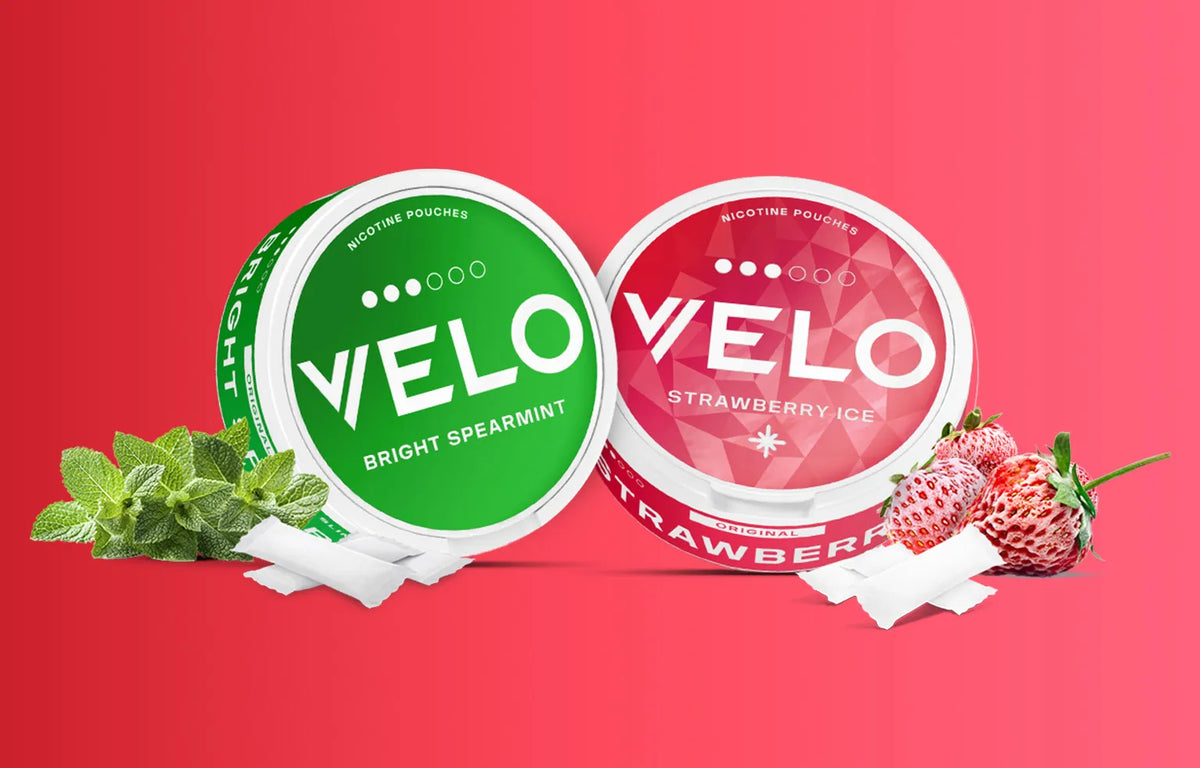
VELO Nicotine Pouches: Flavours, Formats, Strengths and Dots
This guide focuses on VELO’s flavour families, its pouch formats, the strengths described on its UK website and how its dot system is presented.
Read moreabout VELO Nicotine Pouches: Flavours, Formats, Strengths and Dots

Share:
What are Nic Nacs?
Discover ZYN Nicotine Pouches: A UK User's Guide to Benefits